The art of grounding is the practice of bringing your attention out of a racing mind and back into your body and the room you are in. You do it with things that are always within reach: a slower out-breath, whatever your eyes and ears can pick up right now, and the weight of your feet on the floor. A round can take thirty seconds or fifteen minutes. None of it needs a belief system, a quiet room or bare feet on grass, although all three are welcome.
Grounding does not make a hard day easy. It gives you somewhere to stand while the day happens, so you can answer what is actually in front of you instead of the fifth replay of a conversation from this morning.
What grounding means as a practice
A busy mind is rarely in the present. It is rehearsing tomorrow's meeting, rereading an email, or arguing with someone who is not in the room. The body, meanwhile, is exactly where it always is: in a chair, on a train, at the kitchen sink. Grounding closes that gap. You pick something happening here and now, and you give it your full attention for a few breaths.
That is why the practices below keep returning to the same anchors. Breath is always happening. Your senses are always taking something in. Your body always has weight, and something under it holding that weight up. When your thoughts are spinning, an anchor that is physical and specific is far easier to hold on to than an instruction like "calm down" or "be present."
It is the same move meditation makes, done in smaller pieces and with your eyes open. In mantra meditation the anchor is a sound you repeat. In grounding it is whatever your body is already doing.
Grounding versus earthing
Search for grounding and you will soon meet a second meaning. Earthing, also called grounding, is the idea that skin contact with the ground, or with conductive bed pads, mats and electrode patches wired to the ground outside, lets electrons from the Earth flow into the body and change how it works.
A 2012 review in the Journal of Environmental and Public Health makes the case for it. It lists better sleep and less pain among the benefits it describes, but the studies it summarizes are small, several of them pilot studies, and they tested people indoors on conductive systems rather than barefoot outside. The sleep and pain results rest mostly on what participants reported about themselves. Three of its authors also disclosed that they were contractors for the company sponsoring earthing research and owned a small share of it. None of that proves the findings wrong. It does mean they are far from settled, and this page makes no health promises on the strength of them.
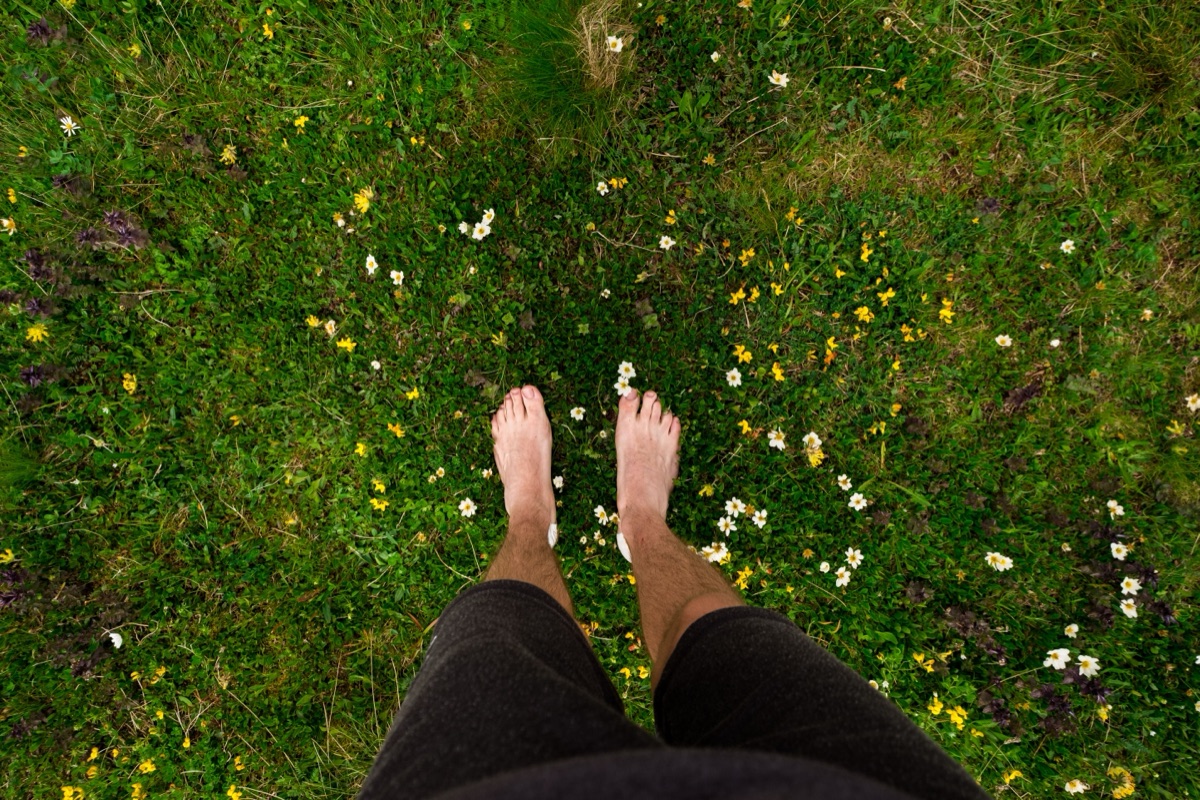
You do not need that question answered to use anything below. Standing barefoot on cool grass is a lovely way to notice your feet, and if you enjoy it, do it. The grounding described here is about where your attention goes, which makes it the same practice on a carpet, in a parking lot or on the fourth floor of an office.
Breath first: lengthen the exhale
Start with the breath, because it goes wherever you go and nobody can tell you are doing it. Breathe in through your nose for a count of four, then out for a count of six to eight, with no pause at the top or the bottom. If four feels strained, use three in and five out. The exact counts matter less than the shape: the out-breath is longer than the in-breath, and nothing is forced.
This is the extended-exhale pattern from the breathwork for beginners guide, which suggests a long exhale for when you want to settle rather than wake yourself up. In grounding it does a second job as well. Counting gives the mind a small, concrete task, and a mind that is busy counting to eight has less room left for the argument it was replaying.
Try five or six rounds and notice whether anything has shifted. If you feel lightheaded, go back to breathing normally. This is meant to be gentle.
The senses: count what is actually here
A version of sensory grounding that counsellors teach is called 5-4-3-2-1. Silently, or under your breath, name:
- Five things you can see. Be specific. Not "a desk" but the ring a mug left on the desk, the scuff near its corner, the light on the edge of the screen.
- Four things you can feel. Fabric on your forearms, the chair against your back, cooler air on your face, a ring on your finger.
- Three things you can hear. Include the quiet ones: the fridge humming, traffic two streets away, your own breathing.
- Two things you can smell. If nothing comes, move closer to something. Your sleeve, a cup of tea, the air at an open window.
- One thing you can taste. Or take one slow sip of water and pay attention to it all the way down.
The exercise is hard to do on autopilot, and that is its strength. It is hard to hunt for a third sound and rehearse tomorrow's conversation at the same time, so the search itself tends to pull you into the room. If a full round feels like too much, do only the first line. Five specific things you can see are a good place to start.
The body: feet, seat, hands, weight
The third anchor is contact. Wherever you are, some part of you is being held up by something, and you can feel it if you go looking.
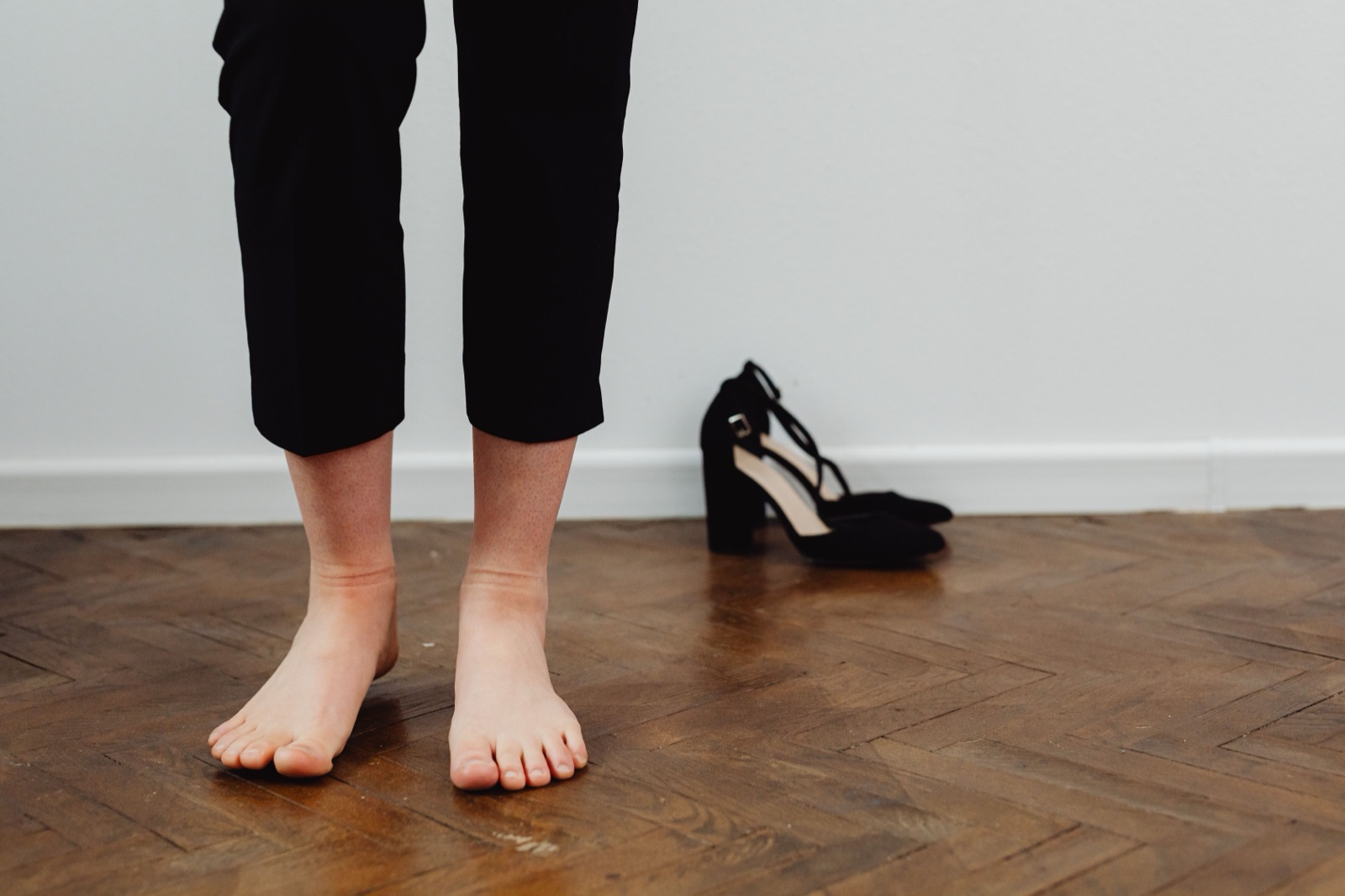
- Feet. Press your feet gently into the floor, then let go. Feel the heels, the balls of the feet, the outside edges. Shoes on is fine.
- Seat. If you are sitting, find where the chair takes your weight, and let it take a little more.
- Hands. Rest them on your thighs or on a table. Notice the temperature and texture under your palms.
- Weight. Last, feel your whole body being drawn down toward the ground, and let your shoulders drop with it on an out-breath.
A slower relative of this is the body scan, where you move your attention from the crown of your head down to your toes. In either one you are noticing, not fixing. If you find a clenched jaw or raised shoulders, you do not have to make the tension leave. Seeing it clearly is the practice. It is easier when nothing is pinching or rustling, which is most of what the post on what to wear to meditate is about, and it applies just as well here.
A one-minute grounding for the middle of a busy day
This is the version for a queue, a gap between meetings, or the car before you walk into the house.
- Put both feet flat and feel the floor.
- Take three slow breaths with a long exhale.
- Name five things you can see, specifically.
- Name one sound.
- Before you move, choose the very next thing you are going to do, and do only that.
Don't skip the last step. A racing mind is usually holding ten next steps at once, and picking one hands the attention you just gathered back to your day in a form you can use.
A longer grounding for the evening
Evenings usually have more time in them, and more of the day still rattling around. Give this ten to fifteen minutes somewhere you will not be interrupted.
- Mark the change. Change your clothes, wash your hands and face, or open a window for a minute. It is the same idea as the small resets in how to remove negative energy from a room, and from yourself: a deliberate line between the day and the evening.
- Breathe. Five minutes of the long exhale, sitting or lying down.
- Scan. Move your attention slowly from the top of your head to your feet. Pause at the jaw, the shoulders, the belly and the hands, and just notice what is there.
- Use your senses. Open your eyes and do one full round of five, four, three, two, one.
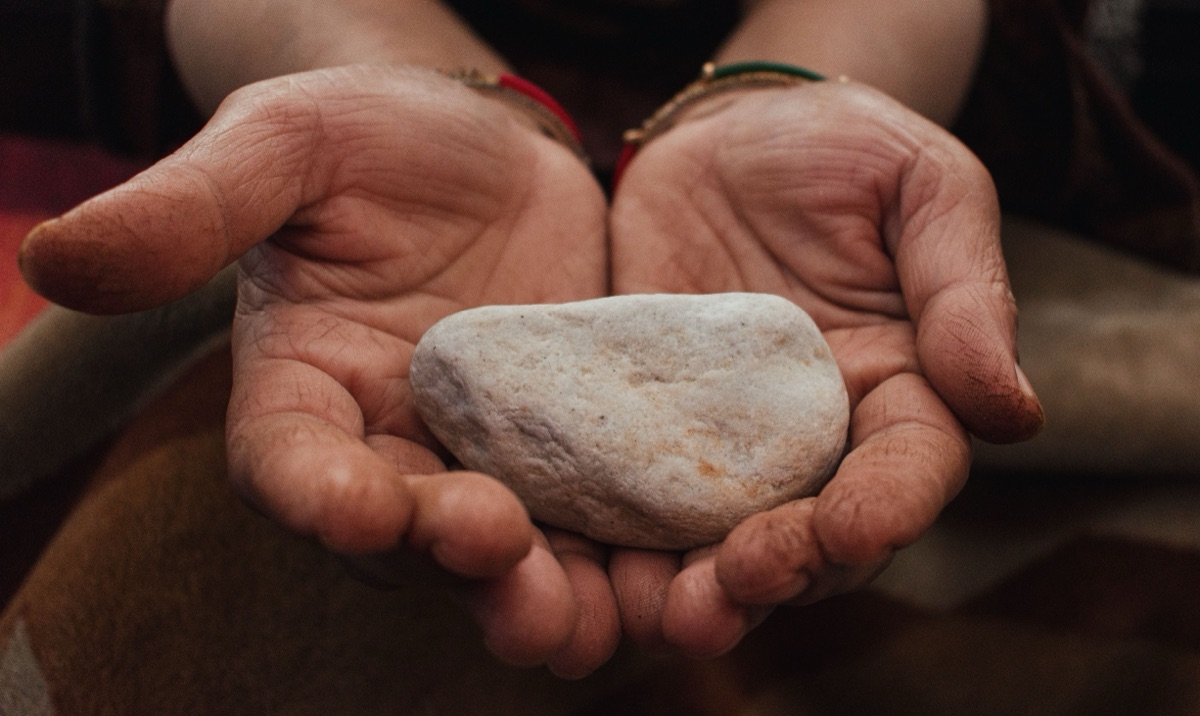
- Do something slow with your hands. Sketch a cup exactly as it looks on the table, water a plant, knead dough, or hold a stone and study its surface. This kind of grounding art asks for your eyes and hands together, and it is hard to do well while your mind is somewhere else. The crystals guide uses a stone the same way, as a practice object for your attention rather than a talisman. Making a cup of tea works too if you give every step your full attention, as in this five-minute Japanese tea meditation.
- Close. Say or write down one thing from the day you are glad of. It does not have to be large.
If you like ritual, the start of this is a natural place for one. Some people light a candle, or a bundle of sage, to open the evening, and how to smudge with sage walks through doing that safely and with respect for where the practice comes from. Smoke is optional; everything else in the list works without it.
When grounding is not enough
These practices are for ordinary busy-mind moments: a stressful afternoon, a hard conversation, a night when your thoughts will not settle. If racing thoughts, panic or dread come often enough to get in the way of your sleep, your work or your relationships, raise it with a doctor or a therapist. Grounding can sit alongside that kind of help, but it cannot stand in for it.