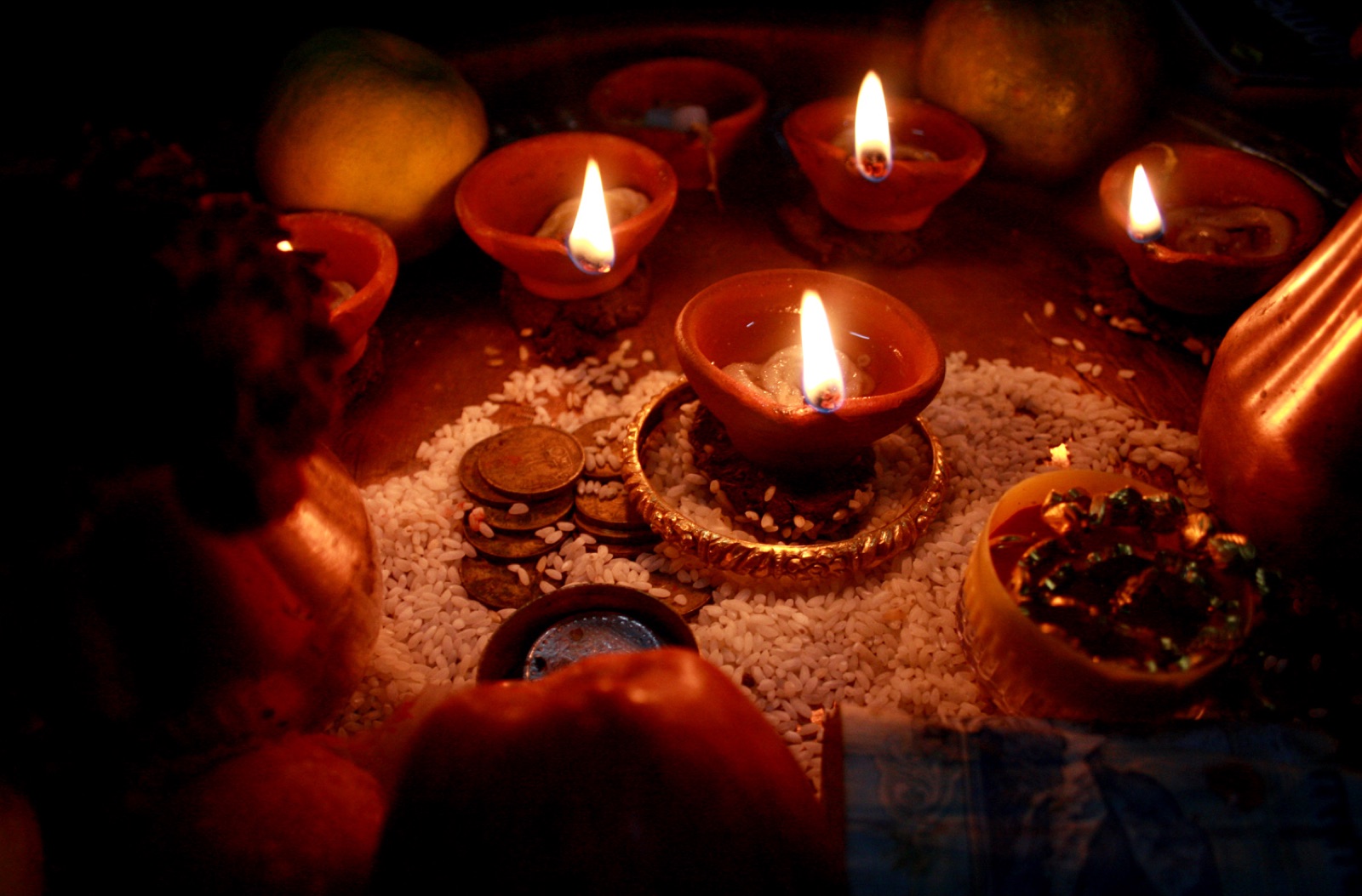
A mantra for money is a short sacred phrase, usually addressed to a figure of wealth such as the Hindu goddess Lakshmi, the god Kubera or the Buddhist goddess Vasudhara, that people repeat as a devotional practice. The plain answer to what it does: no sound puts money in your account. What a money mantra can do is give you a few steady minutes with your attention on money and on what you value, and those minutes are worth something when they lead straight into an action.
Can a mantra attract money?
No. An earlier version of this page said that if you chant about prosperity, prosperity is what you will attract. That promise has nothing behind it, and it has a cruel side: when the money does not arrive, the only explanation left is that you chanted wrong.
What repetition does is narrower and more useful. A mantra gives a wandering mind one small job, and each time you notice you have drifted, you come back to the sound.
For someone worried about money, that has two practical uses. A few minutes of repetition gives your attention somewhere to rest other than the loop of what-ifs. And if you choose a mantra tied to something you value, you turn toward money on purpose, at a time you picked, instead of only when a bill or a balance frightens you into it.
Traditional mantras for wealth and abundance
The mantras people search for under "money mantra" come from Hindu and Buddhist devotional practice. They are not formulas that act on the world. Each one addresses someone: it greets, honours or calls on a deity. Spellings differ from book to book because Sanskrit is written in the Latin alphabet in more than one way, so do not worry if you have seen a version spelled differently.
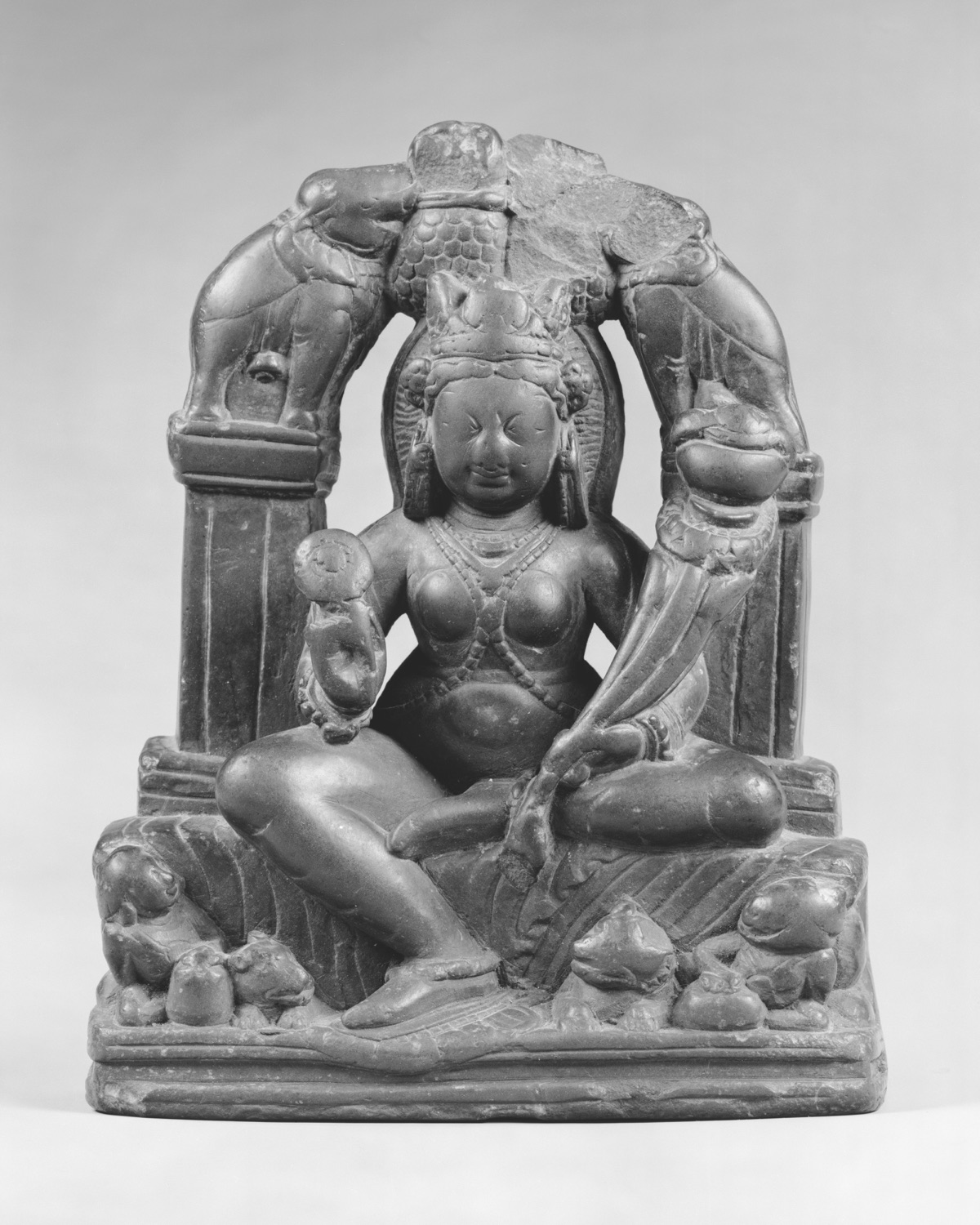
Lakshmi: Om Shreem Mahalakshmyai Namah
Lakshmi is the Hindu goddess of wealth, good fortune, beauty and abundance, and the wife of Vishnu. In most of India she is worshipped during Diwali. Her other name, Shri, is an old word: in the Rigveda it means radiance and splendour, and later texts use it for prosperity, good fortune and wealth. A hymn to her as a goddess, the Shri Sukta, is preserved among the khilas, the supplementary hymns attached to the Rigveda.
Word by word:
- Om, the sacred syllable that opens many mantras.
- Shreem, a one-syllable seed sound built on shri. Devotional writers link it to Lakshmi, though some tantric texts give it to other goddesses.
- Mahalakshmyai, "to the great Lakshmi".
- Namah, a bow or reverent salutation.
Together: "Om, shreem, I bow to the great Lakshmi." The version on the old page ended in svaha instead of namah. Svaha is the exclamation said when making an offering, roughly "hail" or "may it be blessed", and you will find both endings in use.
Kubera: Om Kuberaya Namah
Kubera is the Hindu god of wealth, chief of the yakshas, the semi-divine nature spirits, and regent of the northern direction. As the son of the sage Vishrava he is also called Vaishravana, and under that name Buddhists honour him too, as the guardian of the north and a protector of riches.
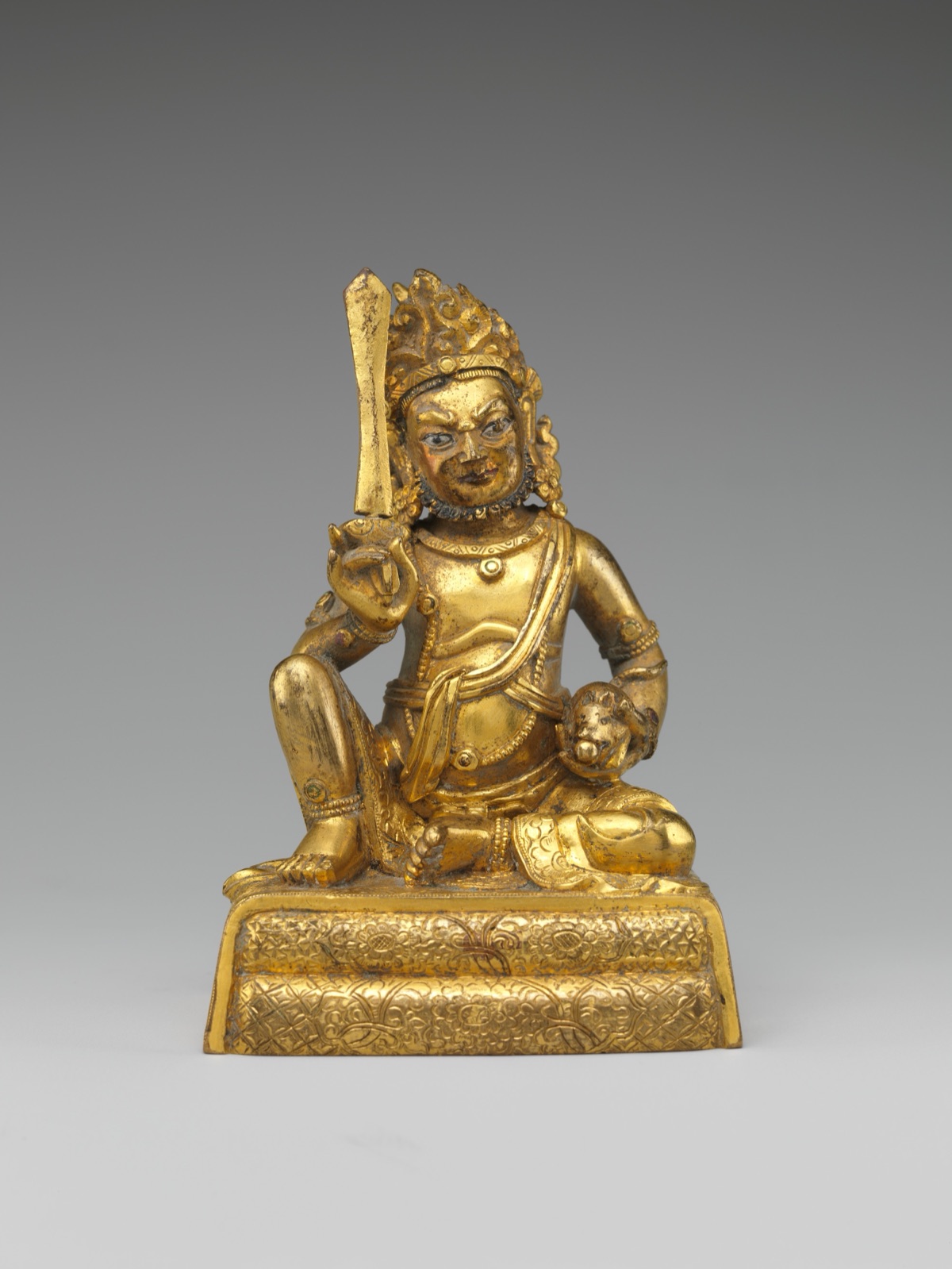
The simplest Kubera mantra follows the same pattern as many salutations to Hindu deities: Om, the deity's name in the "to" form, and namah. "Om, I bow to Kubera." Longer Kubera mantras circulate in devotional books and recordings, but the short form says the same thing.
Vasudhara: Om Vasudhare Svaha
Vasudhara is the Buddhist goddess of prosperity. Her name joins vasu, wealth or treasure, with dhara, which can mean either holding or a stream, so it reads as "Bearer of Treasure", the Rubin Museum's translation, or as "stream of wealth". She is associated with both material and spiritual abundance, and she holds a special place among the Newar Buddhists of Nepal's Kathmandu Valley, where she is one of the most popular deities in family home shrines.
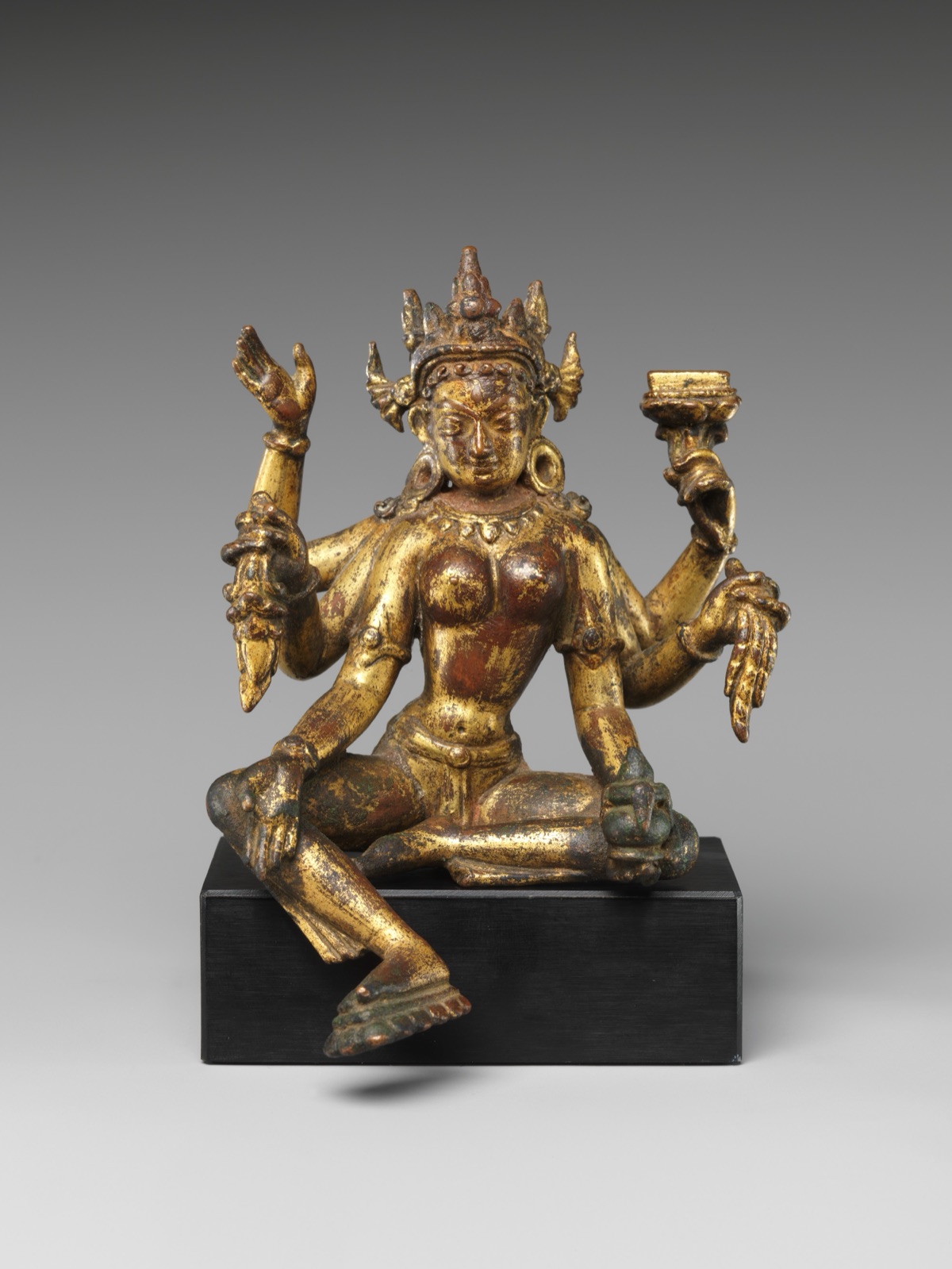
The mantra is short: Om, Vasudhare ("O Vasudhara"), svaha. Like any short mantra it can be counted on a mala.
Her tradition has never pretended that money does not matter. Newar families worship her at home for success in business and in the household, and the Rubin Museum's essay on her describes that wealth being put to work sustaining Buddhist ritual and supporting monasteries.
What "wealth" meant to the people who chanted these
Read the traditions around these mantras and the idea of wealth is wider than a bank balance.
In the Kathmandu Valley, Vasudhara's six-armed form holds a sheaf of rice, and the Rubin essay puts it plainly: for the Newars, rice is wealth. It feeds the family and sustains the religious community. One of her epithets is "Perfectly Generous One". Wealth there looks like a full granary with something left over to give.
Hindu thought names four traditional aims of a human life: dharma, living rightly; artha, wealth and material means; kama, pleasure and desire; and moksha, liberation. In the traditional account, material well-being is a basic necessity and a proper pursuit for someone running a household, as long as dharma governs it. Money has a legitimate place on that list. It is one aim among four, and it answers to the first.
A devotional grouping called the Ashta Lakshmi, the eight Lakshmis, makes the same point in a different way. Each form presides over a different kind of wealth. The lists vary, but they usually include money, grain, courage, children, knowledge and victory.
So when you chant to Lakshmi or Vasudhara, you are borrowing a definition of abundance that includes enough to live on, the security of a household, and the ability to be generous. That is a more useful thing to hold in mind than a number.
Money mantra or money affirmation?
The old version of this page offered six "mantras" that were really affirmations: "Every day I make more and more money", "I do not owe any money to others", and so on. The difference matters.
An affirmation is a statement about you, in the present tense, that you are asked to believe. A money affirmation can be checked against your bank statement, and if you are carrying debt, "I do not owe any money to others" is contradicted every time you say it. There is some evidence that this kind of statement can backfire. In a 2009 experiment published in Psychological Science, people with low self-esteem who repeated "I'm a lovable person" felt worse afterwards than people who did not repeat it, while people with high self-esteem felt better, but only to a limited degree. That study was about self-worth, not money, and it was two lab experiments, so it proves nothing about your finances. It is still a reason to be wary of repeating a sentence your own life disagrees with. The subconscious reprogramming guide takes up why an affirmation that clashes with a belief you already hold tends not to stick.
A devotional mantra makes no claim about your balance. "I bow to the great Lakshmi" is not true or false depending on your account. It honours something, and there is nothing in it for your doubts to argue with.
If you would rather not chant to a deity, you can keep that quality in plain English. Choose a phrase that names a value or a direction, not a fact you have to pretend: "Enough, and some to give." "I look at what is here." "One clear step."
A money mantra practice that ends in action
This is where the practice earns its time. The chanting settles your attention; the task uses it.
- Pick one mantra and keep it. Any of the three above, or a plain-language phrase. Stay with the same one for at least a few weeks.
- Chant for five to ten minutes. Aloud at first, then whispered, then silent if that suits you. Use a mala or a timer so you are not counting.
- Before you open your eyes, name one money task. Make it small enough to finish in about ten minutes: look up your current balance and write it down, open the envelope you have been avoiding, list what you spent yesterday, cancel one subscription you no longer use, or write down one question to ask about your pay.
- Do the task straight away. Not later today. The few minutes after chanting are the calmest you will feel about money all day, so spend them on the thing you would normally put off.
- Look back once a week. Judge the practice by what got done, not by whether money appeared.
The idea is the same one behind setting clear intentions: an intention is only half of it until there is a plan of action and a first step taken.
Scarcity thinking and where the deeper work fits
In their 2013 book Scarcity, the economist Sendhil Mullainathan and the psychologist Eldar Shafir argue that being short of something, whether money or time, overloads what they call mental bandwidth, leaving less room for good decisions and self-control. It is an argument built on their research rather than a settled law, and other researchers who reanalysed one of the key experiments behind it could not confirm its result. But it describes something many people will recognise: money worry crowds out the very thinking that would help.
That is a good reason to keep the practice small. A short daily sitting and one ten-minute task ask very little of a mind that is already stretched, and a big financial resolution asks a lot.
Scarcity thinking often has older roots too: what your family said about money, what felt safe to want. A mantra can quiet the noise for a few minutes, but it does not rewrite those beliefs. The subconscious reprogramming guide is about that layer, and the manifesting guide explains why working on intentions alone so often stalls. If money trouble is serious, a qualified financial counsellor belongs in the plan too, alongside any practice.
What to avoid
- Anyone selling a mantra as a financial guarantee. A chant, a ritual performed on your behalf, or an "activated" object sold with a promise of money is a sales pitch, whatever tradition it borrows from.
- Anyone who says your money problems are a curse or a block that only they can clear, for a fee. Walk away.
- Spending money you do not have to unlock abundance. If a practice needs a purchase before it can work, it is not the practice that is working.
- Treating sacred names as slogans. Lakshmi, Kubera and Vasudhara belong to living Hindu and Buddhist traditions. If you chant to them, learn who they are and say their names with the respect the people who pray to them would expect.
Used honestly, a money mantra is a few minutes of steady attention and a reminder of what wealth is for. That is enough to be worth doing, as long as the task that follows it gets done.