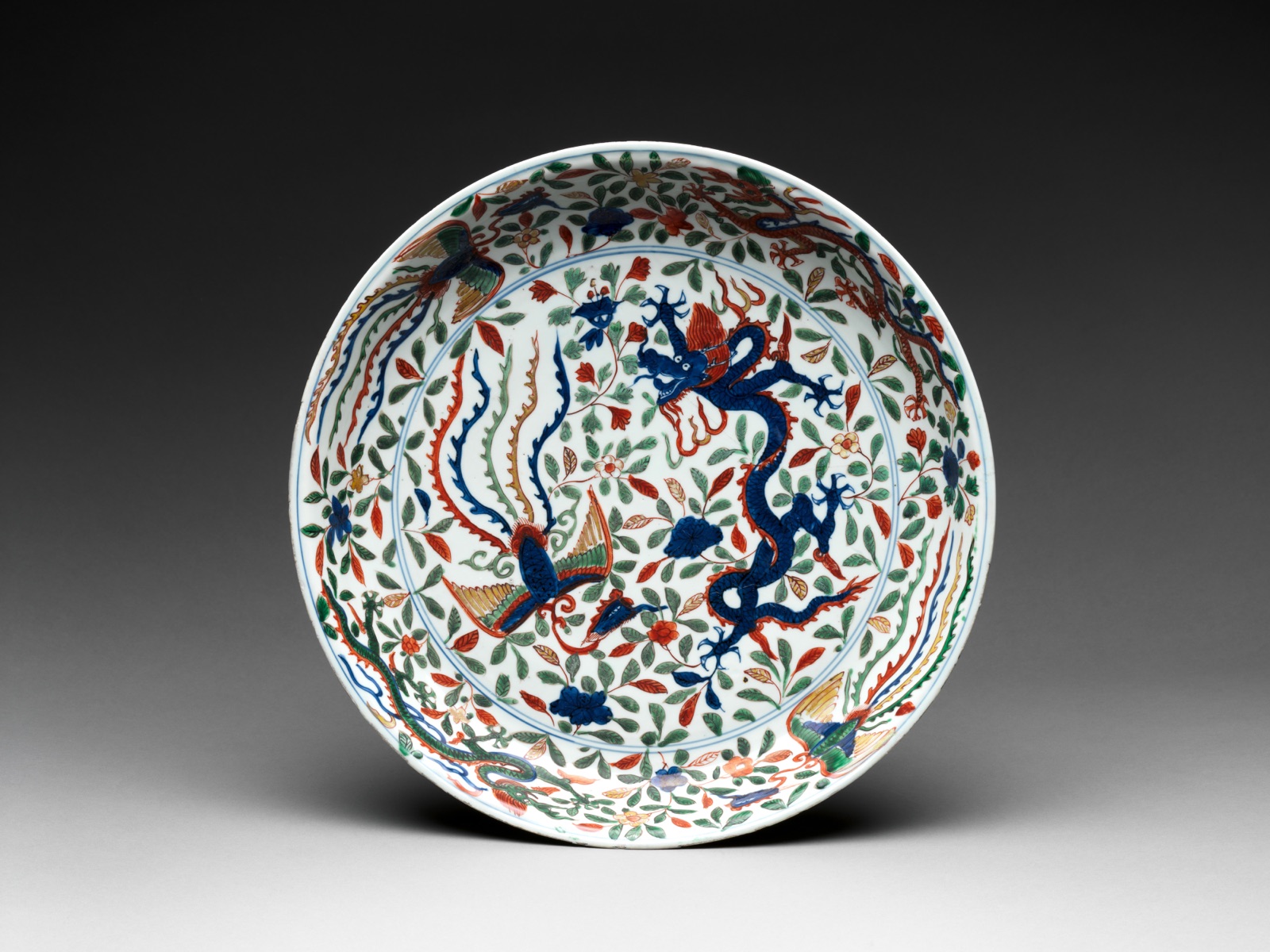
The dragon and phoenix are China's best-known symbolic couple. The dragon stands for the emperor and the masculine, the phoenix for the empress and the feminine, and together they stand for a harmonious marriage, which is why the pair turns up on betrothal cakes and wedding decorations. The love story people search for is a folk legend from Hangzhou: a jade dragon and a golden phoenix spend years polishing a shining stone into a pearl, lose it to the Queen Mother of the West, and follow it down to earth when it falls, where the pearl becomes West Lake and the two of them become the hills beside it.
That is the short answer. The longer one is more interesting, because the symbol, the legend and the romance that gets attached to them online came from different places.
What the dragon and phoenix mean together
The dragon in this pairing is the Chinese long, a creature associated with water and rain, and with imperial power. The phoenix is the fenghuang, and it is not the phoenix of Western myth. The Western bird rises from its own ashes, and the Art Institute of Chicago's glossary of Chinese art describes the fenghuang as a mythical bird not related to it. In Chinese lore it was a bird of good omen: its appearance was a sign that a virtuous emperor was ruling in peace.
During the Ming and Qing dynasties, the dragon was the emblem of the emperor and the phoenix the emblem of the empress. You can see that pairing on objects made for the court. A carved lacquer jar from the Jiajing era of the Ming dynasty (1522 to 1566), built up in layers of black, ochre, green and cinnabar red and now in the Cleveland Museum of Art, alternates a dragon and a phoenix with the characters for fortune and longevity, and the museum reads the two creatures as imperial emblems.
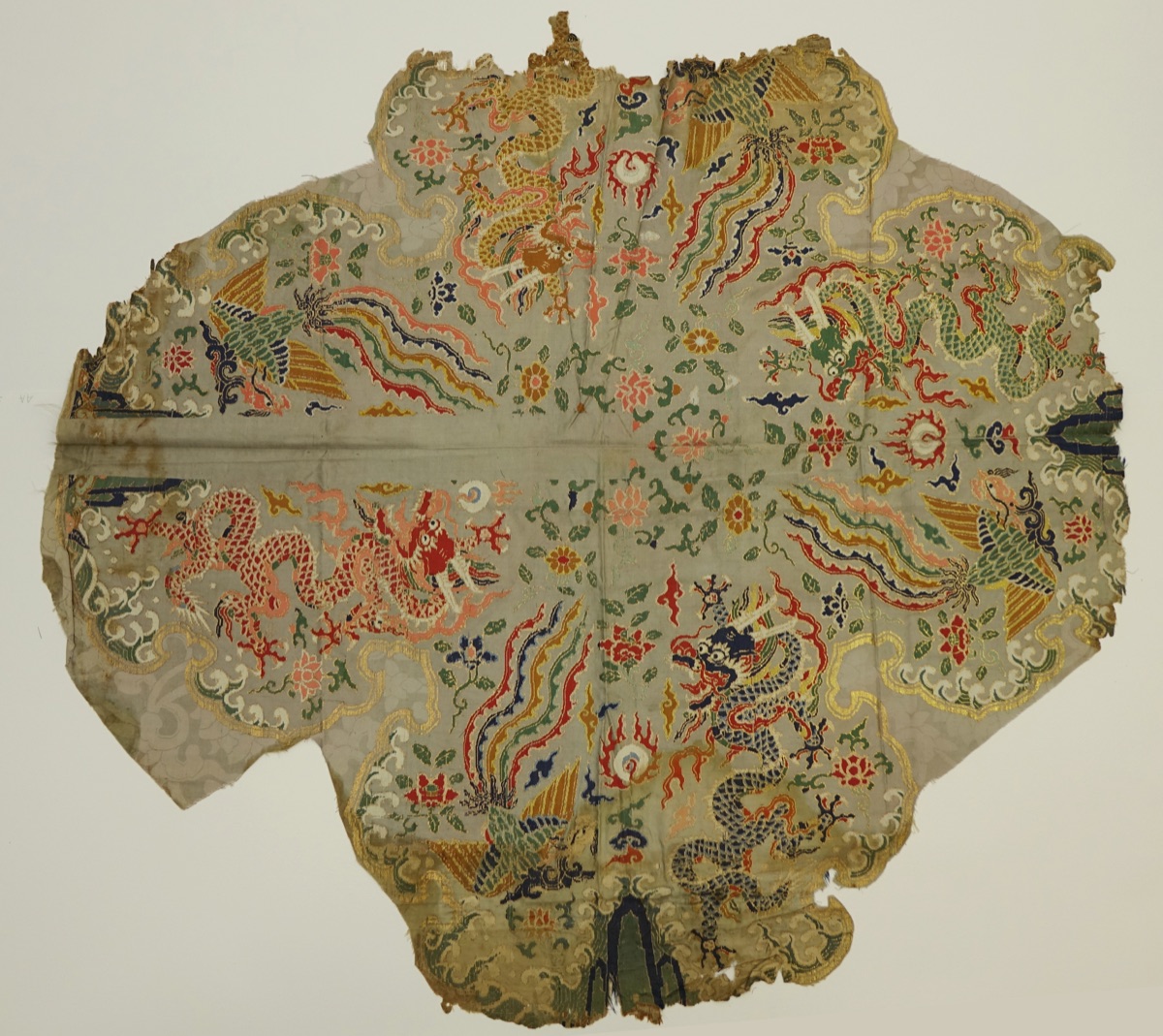
The yin and yang reading has a history of its own. The fenghuang is usually described as beginning as two birds, a male feng and a female huang, a pairing that already stood for yang and yin. As the dragon came to stand for masculinity, the two birds were gradually merged into a single feminine figure, and the dragon took the male role. Put the two side by side and you have yang and yin, the masculine and the feminine, two different natures in one pairing.
The dragon and phoenix love story
The legend is told around West Lake in Hangzhou, and the details shift from one telling to the next. The shape of it goes like this.
Long ago, a jade dragon lived in a cave on one side of the Heavenly River, and a golden phoenix lived in a forest on the other. One day the two of them came to an island in the sky and found a shining stone there, and they decided to shape it into a pearl together. The dragon worked it with its claws and the phoenix with its beak, day after day and year after year, until the stone became a pearl so bright that wherever its light fell, trees stayed green and flowers bloomed. Somewhere in all that work, the two grew fond of each other, and neither went home again. They stayed on the island to look after the pearl.
The Queen Mother of the West saw the pearl and wanted it, and one night she sent a soldier to steal it while the two slept. The dragon and the phoenix searched everywhere and found nothing. Then, at her birthday feast, the Queen Mother brought the pearl out to show her guests, and the two followed its light to her palace. When they claimed it, a tug-of-war broke out over the golden tray it sat on, and the pearl rolled off the edge and fell from heaven. The dragon and the phoenix flew down beside it to keep it from breaking. Where it landed, it became a clear green lake. They could not bear to leave it, so they turned themselves into two hills beside the water, to watch over it for good.
The hills are real. Phoenix Hill still stands at the edge of West Lake, and the hill joined to it, now called Yuhuang Shan, has also been known as Yulong Shan, Jade Dragon Hill.

Notice what kind of love story it is. Nobody falls in love at first sight. Two very different creatures grow close while making something beautiful over a long time, lose it, and choose to stay with it anyway. It is a love story about partnership and devotion, which suits a symbol that came to mean marriage.
Folk tale or later retelling?
It helps to separate three layers that usually get blended together.
The imperial symbol. The dragon for the emperor and the phoenix for the empress is documented court symbolism of the Ming and Qing dynasties, visible on objects like that lacquer jar.
The West Lake legend. This is a folk tale: a story that explains how a much-loved lake and its hills came to be. It belongs to Hangzhou, it appears in collections of West Lake folk tales in more than one version, and the tellings we could find set it simply long ago, with no dynasty and no original author. A retelling that supplies either one is adding detail.
The romance. Retellings, including an earlier version of this article, go further and give the pair personalities: the dragon creative and ambitious, the phoenix warm and wise. Those sketches are interpretations of the symbol rather than events in any story. And if a version has the phoenix rising from ashes to rejoin the dragon, that detail is borrowed from the Western phoenix. There is nothing wrong with enjoying these versions. It is just worth knowing they are new clothes on an old figure.
Where you see the dragon and phoenix today: weddings, cakes and double happiness
The pairing lives on most visibly at weddings. The dragon-and-phoenix design is read as a sign of a happy relationship between husband and wife, and there is a four-character idiom built on the pair: 龍鳳呈祥, lóng fèng chéng xiáng, roughly "prosperity brought by the dragon and the phoenix."
Two places you are likely to meet it:
- Dragon and phoenix cakes. Among the traditional betrothal gifts, the groom's family sends the bride's family pastries in pairs, one pressed with a dragon and one with a phoenix. Hong Kong bakeries still sell them for the betrothal visit, as a wish for a long and happy marriage.
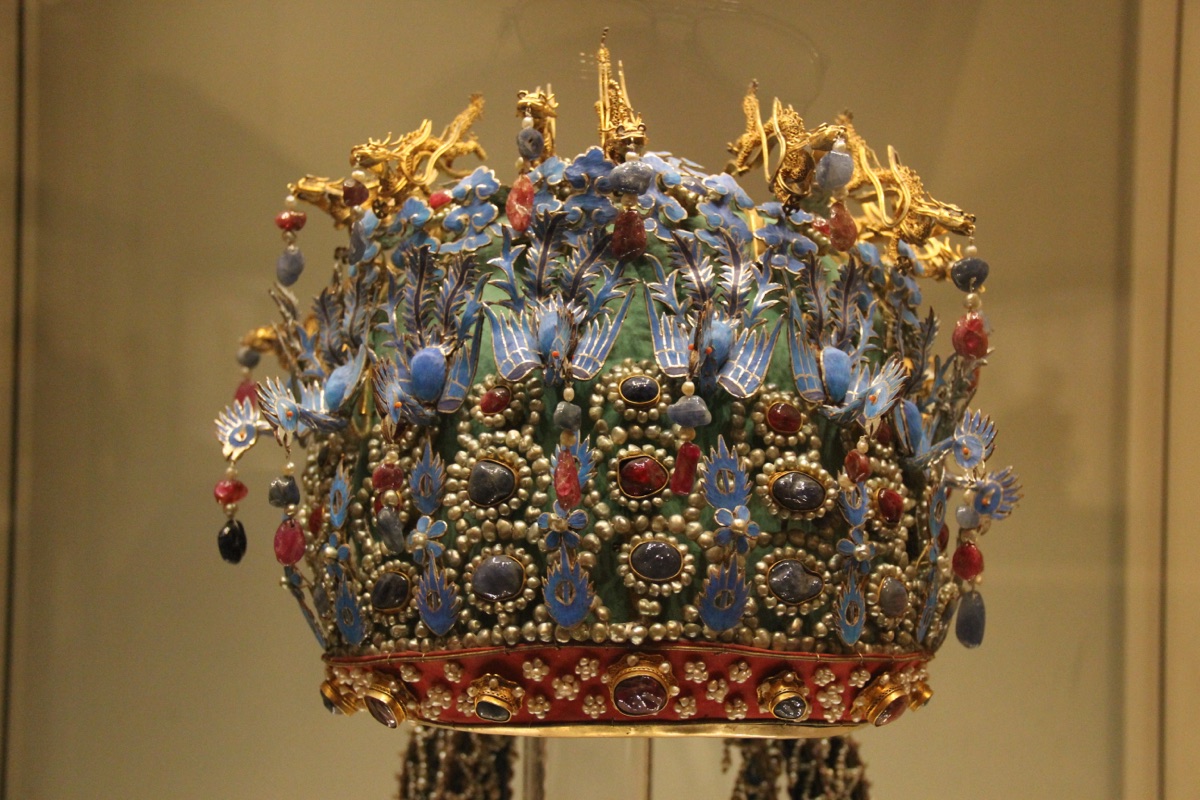
- The phoenix crown. The fengguan was a ceremonial headdress worn mainly by noblewomen, and empresses wore elaborate versions set with both dragons and phoenixes. During the Ming and Qing dynasties, the headdress an ordinary bride wore on her wedding day was also called a phoenix crown, and her veil or curtain of beads could hang from it.
The other symbol you will see all over a Chinese wedding is 囍, "double happiness." It is not a standard character but a ligature: two copies of 喜, the character for joy, pressed together into one square. Double happiness and the dragon and phoenix say much the same thing in two visual languages.
The celestial animals of feng shui, and where the phoenix sits
The earlier version of this article said feng shui has five celestial animals: dragon, snake, turtle, tiger and phoenix. Lists like that circulate in modern feng shui writing, but they blur an older and tidier scheme.
Classical Chinese cosmology names four guardian creatures, one for each direction, season and element:
- the Azure Dragon of the east, spring and wood
- the Vermilion Bird of the south, summer and fire
- the White Tiger of the west, autumn and metal
- the Black Tortoise of the north, winter and water
When a fifth is added for the center and the element earth, it is usually the Yellow Dragon. The snake is not a separate animal in this scheme: the Black Tortoise is a composite creature, a turtle entwined with a snake.
The Book of Burial, a classic feng shui text traditionally credited to Guo Pu, reads a grave site the same way: the dragon on the left, the tiger on the right, the bird in front and the tortoise behind. The Book of Rites already uses the four to mark front, back, left and right for an army on the march. The "phoenix" of feng shui is really the Vermilion Bird, a different creature from the fenghuang, although the two are often mixed up.
Here is a detail that is easy to miss. In the directional scheme, the dragon's opposite is not the bird at all. The dragon on the left faces the tiger on the right. The dragon and phoenix as a married couple come from imperial and wedding symbolism, not from the compass. For more on traditions like these, browse the Ancient Wisdom archive.
What the pairing offers a modern relationship
The most useful thing in the dragon and phoenix may be what they are not. They are not two halves of one creature, each incomplete without the other. They are two whole beings with different natures, a creature of water and rain and a bird of good omen, who chose to make something together.
That is a healthier picture of partnership than the idea that someone else completes you. It leaves room for each person to be fully themselves, and it puts the weight on what the two of you build and protect, the pearl in the story, rather than on finding a perfect match.
If you want to bring the symbol into your own relationship, treat it as a prompt rather than a charm. A dragon-and-phoenix piece in your home will not do the work of a marriage for you. What it can do is remind you to ask a few questions:
- What does each of us bring that the other does not?
- What is our pearl, the shared thing we are shaping slowly, over years?
- When it gets knocked loose, do we both go after it?
Questions like these work best when you turn them into something you actually intend. Our piece on how to set clear intentions walks through that step, and It's All About Intention makes the case for why the intention comes first. For couples who spend long stretches apart, how to spiritually connect with someone far away offers small shared rituals in the spirit of two hills keeping watch over the same lake. And if you are curious about how intention turns into change beneath the surface, the manifesting guide lays out the deeper layers.
The dragon and the phoenix stayed with what they made. That is the part of the legend worth keeping.